“Despite opposition and death threats, Rosalie resolutely fought for and achieved
National Historic Landmark status for the Rohwer Relocation Center Cemetery.”
ODG Project Note: Although this project focuses on individuals who helped during the WWII period, an exception was made to include this passionate thanks to a woman who, with great determination, sought to bring light to her town’s hidden history upon first hearing of it forty years later in 1982. This contribution sent by Mary Ishimoto Morris is a modified form of the original June 7, 2024 Tribute to Rosalie Santine Gould at the Ron Robinson Theater in Little Rock, Arkansas, during a JAMPilgrimage to Jerome/Rohwer.
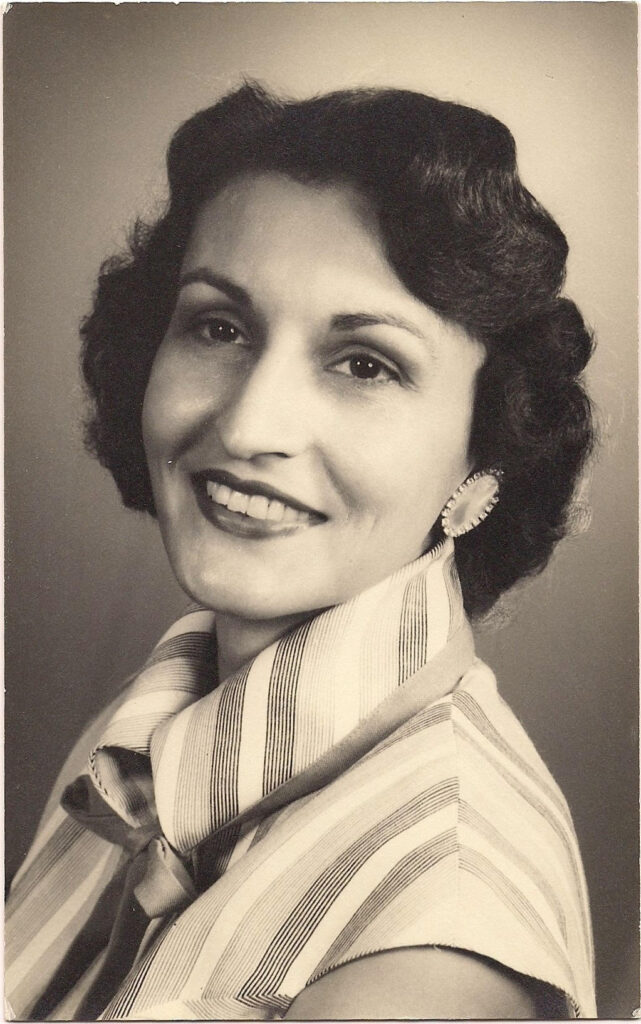
Rosalie Santine Gould
Champion for Jerome and Rohwer
Mayor of McGehee, Arkansas from 1983–1995
By Mary Ishimoto Morris,
a descendant of Jerome and Rohwer
Rosalie Santine Gould is cherished in the Jerome and Rohwer communities as the Italian American former mayor of McGehee, Arkansas (1983-1995) who fought for and achieved – with George Sakaguchi, a former internee and JACL leader from St. Louis, Missouri – National Historic Landmark status for the Rohwer Relocation Camp Cemetery. In 2004, she told the Arkansas Democrat-Gazette: “A lot of the people in this area had sons or husbands killed by the Japanese in the war and they were not very happy when I started working with the Japanese Americans. I received death threats and comments saying that they didn’t want any ‘Japs’ around and that I was a woman and I needed to stay at home … Well, that was the wrong thing to say. You don’t tell me that.”
In the postwar lore of Jerome and Rohwer, no non-Japanese name is more storied and notable than Rosalie Santine Gould. Miss Rosalie’s contributions to the survivors and descendants of our community are immeasurable except in their infinite resonance encompassing all of our elders, past and present, and all of their descendants into the future.
In 1982, while serving as president of the McGehee Women’s Chamber of Commerce, Rosalie received a request to host a dinner for Japanese Americans returning to Rohwer to dedicate a monument at the 40th anniversary of the camp’s opening. She was glad to, but needed to ask, “What camp?” She had taken her children for picnics at the cemetery, rundown due to neglect and vandalism, but knew nothing about its history.
However, she remembered feeling there as if she were hearing voices whenever wind rustled through the trees.
At that dinner on May 30, 1982, Rosalie listened to story after story by former incarcerees. She was moved to invite her new friends to call her and come back to visit. Soon more former internees of Rohwer and Jerome — families, then busloads of Japanese Americans began arriving at her home from all over the country, thousands over time, often bequeathing artwork, journals, photos, and other keepsakes from their time in camp to her. She also met Mabel Rose Jamison “Jamie” Vogel the former art teacher at Rohwer High School, who became a very close friend. Graduate students from universities near and far also visited to view the art and artifacts at her home.
From 1983 to 1995, Rosalie served as the first woman mayor of McGehee. In the early 1990s, with George Sakaguchi of St. Louis, Missouri, whose parents were former incarcerees, she raised an initial $35,000 to begin a restoration program for two monuments at the Rohwer cemetery built by internees in 1944 and 1945. Despite opposition and death threats, Rosalie resolutely fought for and achieved National Historic Landmark status for the Rohwer Relocation Center Cemetery. Once the official designation was announced on July 6,1992, she no longer “heard the voices from the trees.”
Before Jamie Vogel passed in 1994, she bequeathed her collection of her students’ artworks to Rosalie. In 2010 Rosalie donated her priceless accumulated artifacts – the largest collection of incarceration camp art in private hands – to the Butler Center for Arkansas Studies in Little Rock. The several hundred paintings and other works of art, 22 boxes of camp documents, newsletters, and 185 handwritten internee autobiographies dating from 1942, are now permanently preserved as the “Rosalie Santine Gould – Mabel Jamison Vogel Collection.”
On June 7, 2024 in Little Rock, Arkansas, the Jerome Rohwer Memorial Pilgrimage was honored to host “A Tribute to Rosalie Santine Gould,” long-time friend and champion of the survivors and descendants of the Jerome and Rohwer incarceration camps.
A friend who stands up for you when no one else has the courage, compassion or nobility of character to do so, is such a rare and precious treasure. For her over forty years of selfless dedication to honoring our history, and for tirelessly raising consciousness of the Japanese American incarceration experience, the survivors and descendants of Jerome and Rohwer sincerely hope our heartfelt tribute will communicate to Miss Rosalie how loved and cherished she is and always will be.
© Mary Ishimoto Morris, 2025.
Rosalie’s daughter, Vivienne Schiffer, is an attorney, filmmaker, and author of Camp Nine: A Novel. She documented her mother’s close relationship with the Jerome and Rohwer communities in her 2015 award-winning documentary Relocation, Arkansas: Aftermath of Incarceration (https://www.relocationarkansas.com/ ), which was screened nationally by PBS. Her website is http://www.vivienneschiffer.com
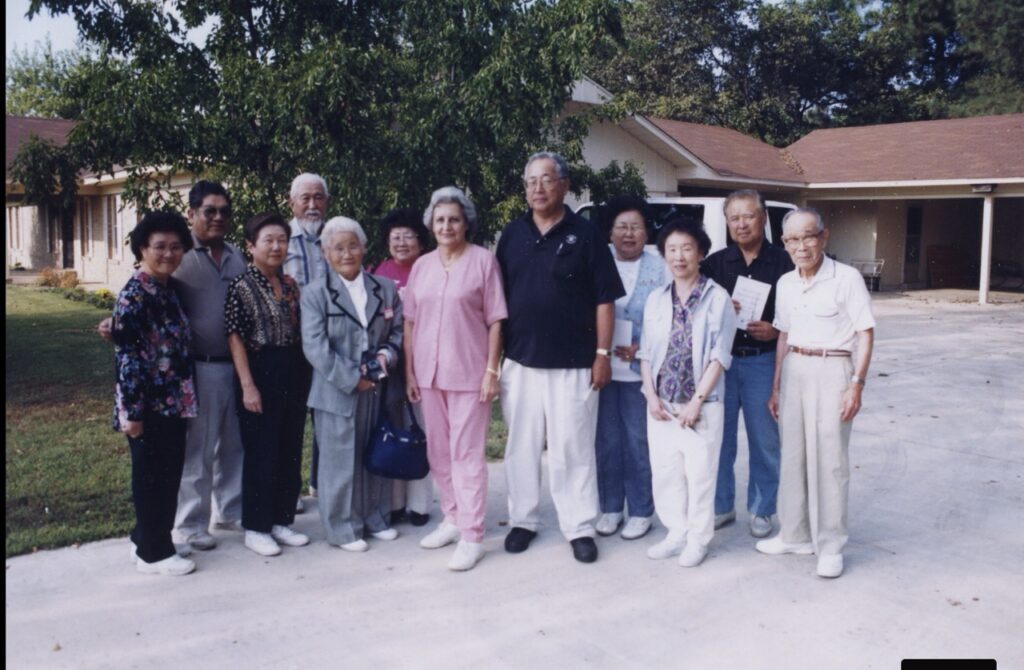
Rosalie Santine Gould with Japanese American visitors, Oct. 1997. Photo is from the Mabel Rose Jamison Vogel / Rosalie Santine Gould Collection of the Butler Center for Arkansas Studies, Central Arkansas Library System.

This photo is licensed under a Creative Commons Attribution-NonCommercial-NoDerivatives License, version unstated. Link to CC BY-NC-ND 4.0 International .
Mary Ishimoto Morris learned about Miss Rosalie from Paul Takemoto, whose mother Alice Takemoto was a friend of Mary’s late mother, May Asaki, from Jerome. Paul and Alice were featured in the documentary Relocation, Arkansas: Aftermath of Incarceration (see above) about the aftermath of incarceration by Vivienne Schiffer, Miss Rosalie’s daughter. When Mary met Miss Rosalie at her home in McGehee, Arkansas while the film was in production, she was overwhelmed with humility and gratitude to Miss Rosalie for her courage and compassion. When she tried to express her appreciation, Miss Rosalie stopped her and said in her firm but gentle distinctive Arkansas drawl, “Why I’m the one who should be thanking you! I didn’t do anything anyone else wouldn’t have done.” What a different world it would be if only that were true! –Mary Ishimoto Morris