“…it makes me so happy to think that some farmers in Tigard, Oregon
were so supportive of their Japanese neighbors back in the day.
They are a real role model for people today.”
Neighbors in Tigard, Oregon
By Jan Bernsten,
who picked berries on the Hasuike farm in the 1960’s.
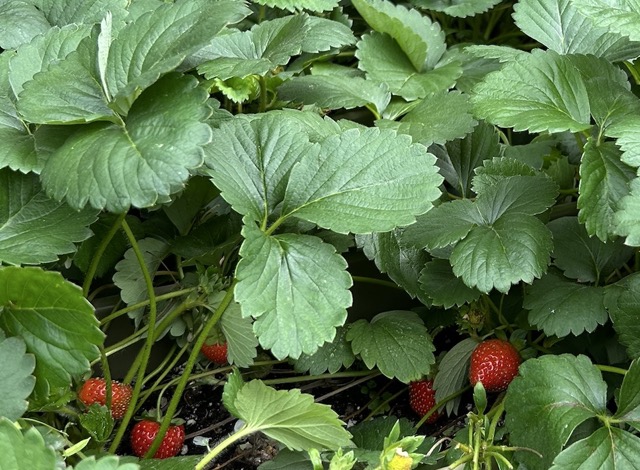
I have a particular interest in Japanese Americans because in the early 1960’s I spent middle school and high school summers in my home town Tigard, Oregon, picking fruit on a farm owned by a large Japanese American family. Two brothers my dad’s age ran the strawberry farm with their wives; we would see Grandpa Hasuike when he would wander out occasionally to see how things were going. The brothers’ kids were in school with the rest of us. Basically every kid in the school was out there working in June and early July. The family was very highly regarded in the community. The Hasuikes had immigrated to the US in the early 1900’s.
Fast forward to 2015. The Lansing State Journal ran a story about a Japanese American family from Detroit who had lost everything on the West Coast during World War II, their business and their home included. They were interned in Arizona camps for several years. This immediately got me to thinking about the Hasuikes. Where were they during WWII? My parents had never mentioned anything about it.
I found out the members of the Hasuike family were an exception to the rule of what happened to most Japanese Americans during World War II. When the specter of internment was raised, some local farmers got together to see what they could do to help. If the Hasuikes got permission to leave the western coast area and work on a vacant farm, they could do that rather than being sent to an internment camp. The Hasuikes found farmland in eastern Oregon to lease. With the help of neighbors, they made a caravan of trucks and cars and took all the farm equipment and the furniture from the Hasuikes’ house to near Ontario, Oregon, 375 miles from Portland! Can you believe it?
These neighbors also rented out the Hasuike farm in Tigard, so the family did not lose it. An eye was kept on the Hasuike’s house to make sure no one tried to take it over while it was empty.
When war was over, the caravan was repeated to bring all the equipment and possessions back to Tigard. The family moved back into the house and I heard that neighboring farmers had a potluck to welcome them back. They were happy to have them for many years after that, because local parents were more than willing to send their kids to the fields to pick berries in the summertime.
With all the anti-Asian racism going on now, it makes me so happy to think that there were farmers in Tigard, Oregon who were so supportive of their Japanese neighbors back in the day. They are a real role model for people today.
Jan Bernsten, Jan. 2026.

This content is offered under offered under Creative Commons license CC BY-NC-SA Attribution-NonCommercial-ShareAlike 4.0 International. You are free to use, share and remix this content as long as you attribute the work, only use it for non-commercial purposes, and offer any work that builds on the content under these same conditions. For more information, please click on the icon for license details.
ODG Post-story notes: Japanese American farmers were given just weeks to voluntarily move to outside of the West Coast “exclusion zone” and avoid incarceration in concentration camps if they had a specific destination to support themselves there and received government permission. In a 1978 oral history interview of Yoshio and Sachiko Hasuike, Yoshio described how members of the Hasuike family first went to eastern Oregon where they found farmland to lease. They received permission to voluntarily relocate, and packed four trucks and other vehicles of farm equipment and household goods. Neighbors Johnny Baggenstos and Donald Meyers helped drive a caravan of “eight or ten” vehicles to eastern Oregon. As Johnny Baggenstos used his own truck, Donald Meyer returned back to Tigard with him.
Reference:
Hasuike, Y., & Hasuike, S. (1978, May 5). Yoshio and Sachito Hasuike oral history recording Part 2 (L. Meyer, Interviewer) [Audio recording]. Washington County Oral Histories, Pacific University. https://washingtoncountyheritage.org/s/oral-histories/item/124513
The Japanese American Museum of Oregon website describes how in the Washington County area of where the Hasuike family farmed, “a bond among the farmers” included immigrants and those of European heritages. After the war, It took immense work to re-start the horticultural production, but the Hasuikes still had their land. “Yoshio and Sachiko, part of the second generation of berry growers, were beloved, and memories of working on their farm, documented in local newspapers, reveal that they cultivated a strong sense of community among the pickers.”
Reference:
Japanese American Museum of Oregon. (n.d.). Strawberry picking boxes. 25 for 25. Celebrating 25 years of the Japanese American Museum of Oregon with a look at 25 objects that define the collection. https://jamo.org/25-objects/