Story26A

“They had been egged and spit on by the local racists
for being friends to our family.”

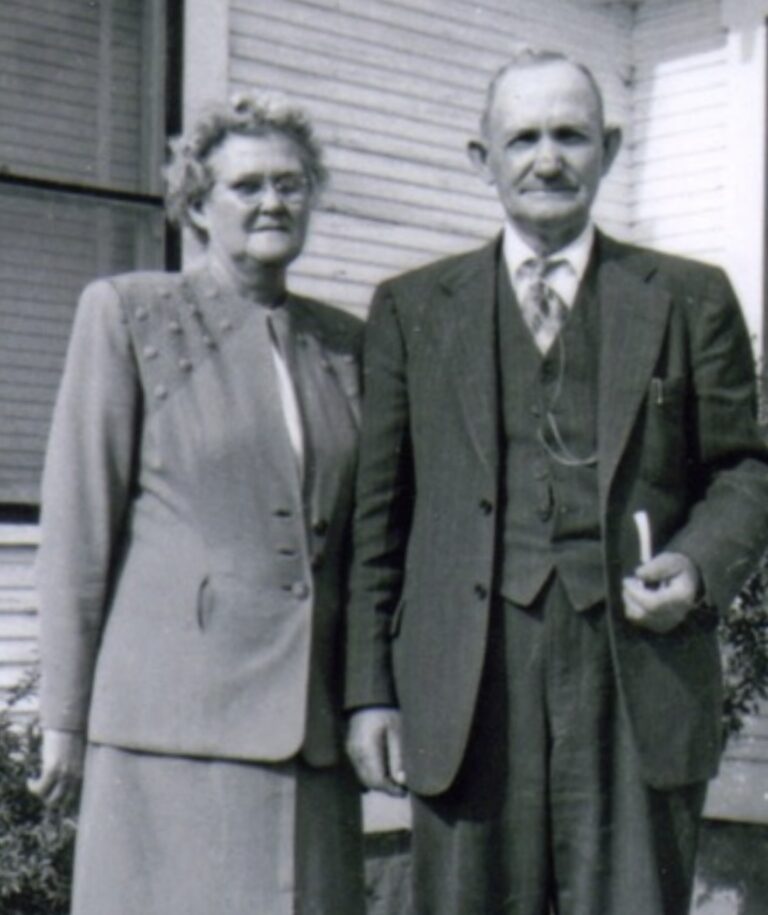
Mr. and Mrs. Jeppe and Alma Raven
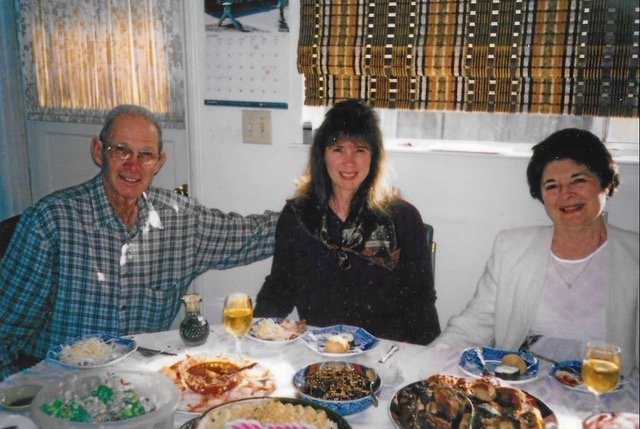
Their son Irving, with daughter Cheryl and wife Emma.

The Raven Family

“extraordinary courage, kindness, humanity, love, shared values,
and enduring, “salt of the earth,” neighborly and generational friendship.”

By Kerry Yo Nakagawa

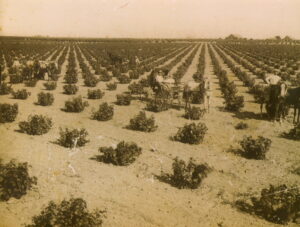
Our grandfather, Hisataro Nakagawa, immigrated from Nukushina, Hiroshima,
Japan, to Olaa (Big Island, Hawaii) at the age of fourteen. He worked at the
Kaiwiki Sugar Cane Plantation before moving to Bowles, California, in 1886.

There, he acquired forty acres for wine grapes, with twenty acres later going to his cousin, Masaichi Nakagawa. Hisataro, his wife Sasayo, and their sons Johnny and Dyna operated the farm from the turn of the century until the 1960s.The Nakagawa family shared a close friendship with their neighbors, Jeppe and Alma Raven, immigrants from Denmark.

Irving Raven, Jeppe’s son, recalled that despite their heavy accents, Hisataro and Jeppe communicated through sign language and broken English. Hisataro had an Issei/pidgin Hawaiian accent, and Jeppe had a Danish accent.

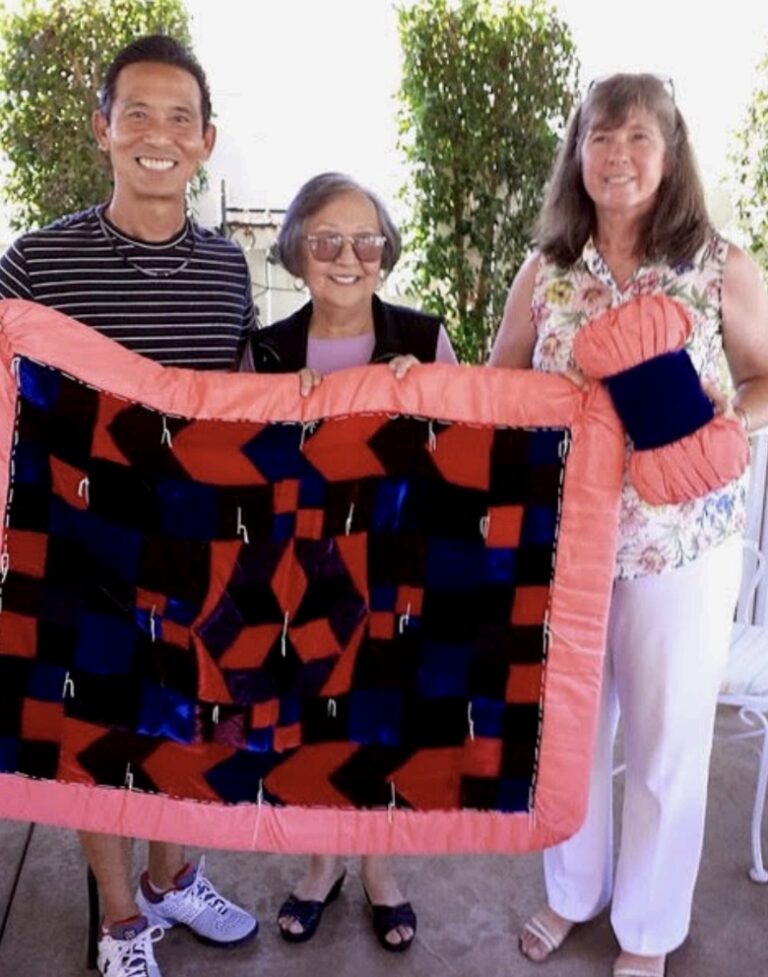
Sasayo, our grandmother, once handmade a baby blanket and pillow for the Ravens’ granddaughter, Cheryl, which became a cherished family heirloom, stored for decades in their antique cedar chest.

During WWII, the Nakagawa family entrusted their farm to the Ravens when
they were forcibly relocated to Jerome, Arkansas. Irving Raven remembered
accompanying his father to the local ‘Feed Store’ after the Nakagawas had first
been sent to live in horse stalls at the Fresno Fairgrounds. The store owner and
his farmer friends expressed silent anger, remarking, “You know, Mr. Raven, the
Nakagawas are ‘Enemy Aliens’ now, and you shouldn’t take care of their ranch.”

Jeppe, looking around the room, asked, “Is that the way you all feel?” When the
farmers nodded in agreement, Jeppe declared, “Well, if that’s the way you feel,
you don’t need my business anymore,” and walked out with his son.

After the war, the Ravens and the McClurgs, neighbors to the Ravens, picked
up the Nakagawas from the Sacramento train station, bringing them home to
their farm. They had been egged and spit on by the local racists for being
friends to our family. My mother, Rosie, recalled a Caucasian lady approaching
her at the Sacramento train station and screaming, “How dare you come back
to California?!” My father, a plumber in our small farming town of Fowler – a
diverse “Salad Bowl” of cultures — was even refused gas at a local station.
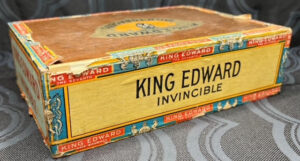
Upon returning to the Central Valley and entering the Nakagawa farmhouse, Jeppe presented Hisataro with a cigar box containing all the cash the farm had generated over the previous four years. The Ravens not only managed the farm but also returned all profits from the wine grapes.

Ninety-nine percent of Japanese Americans suffered immensely from their incarceration in “hellscape” Assembly Centers (animal stalls) and permanent desert wastelands. They returned home to nearly a decade of hostility and hatred as “Enemy Aliens.” America imprisoned its own citizens solely based on their race and economic status. It took almost a decade for the Nisei generation to feel secure enough to have children again, thus creating the Sansei generation. I believe the Sansei have lost much of their Japanese language, culture, heritage, and customs due to the trauma, sacrifice, and hardships of the “incarceration.” The Nisei generation desired their children to be “as American as possible” to facilitate their transition and assimilation into mainstream culture.

Ten years ago, my sister Janie (who was a toddler at the Jerome, Arkansas camp) and I reconnected with Cheryl. Cheryl gave me the “sacred blanket and
pillow” handmade for her to pass on to our granddaughter, Olivia Rose, as
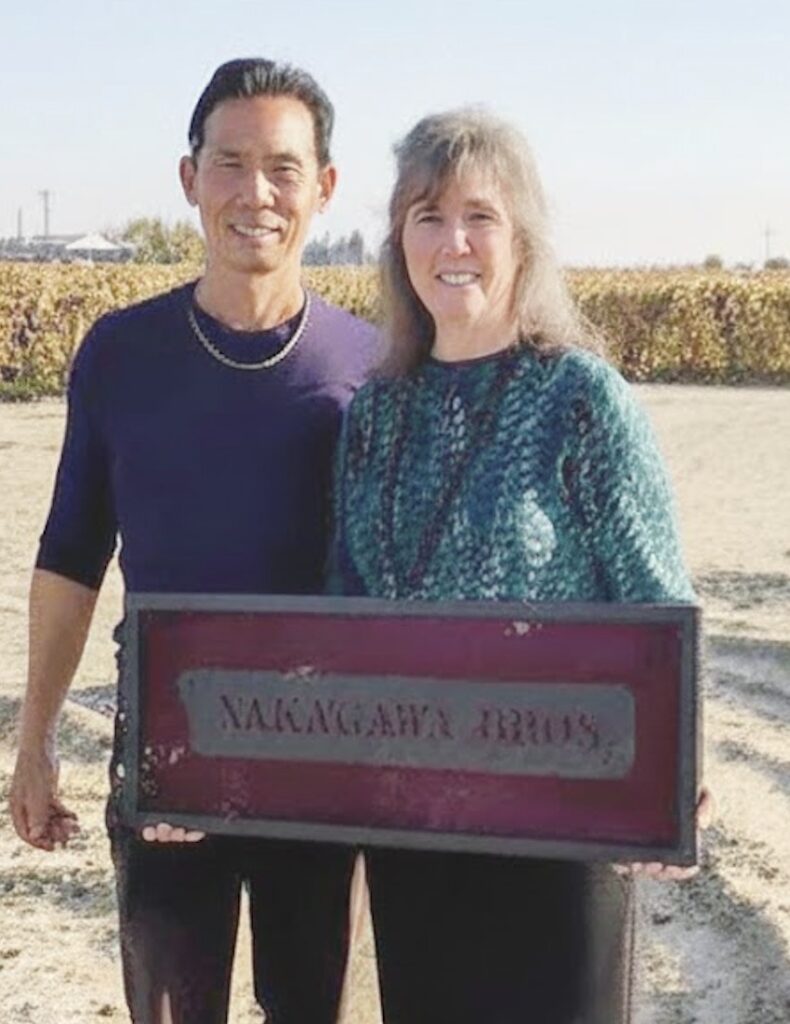
family keepsakes. She also gifted us a framed pre-war metal sign, “Nakagawa
Bros.,” which the farm used as a template to mark grape bins. The Ravens are
truly like family to us—not by blood, but through their extraordinary courage,
kindness, humanity, love, shared values, and enduring, “salt of the earth”
neighborly and generational friendship.


All photos courtesy of Kerry Yo Nakagawa.

©2026, Kerry Yo Nakagawa.

Kerry Yo, with his sister, Janie, and Cheryl Raven, passing down the quilt and pillow that Sasayo had long ago made for Cheryl as a baby, back to the Nakagawa family to welcome the baby granddaughter of Kerry Yo and Jeri.
Cheryl had the "Nakagawa Bros." farm stencil framed as a gift to the family.
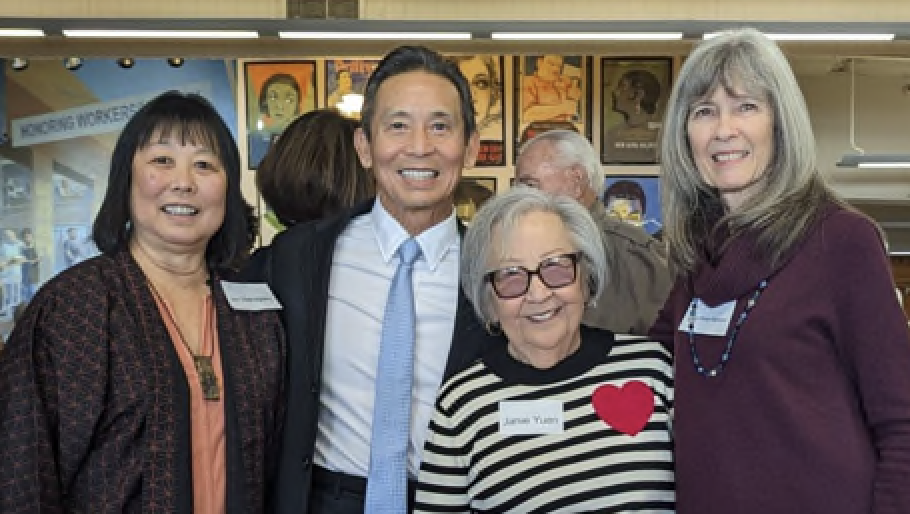
Jeri and Kerry Yo Nakagawa with his sister, Janie, and Cheryl Raven at Fresno's Day of Remembrance, 2024.

Kerry Yo Nakagawa is an author, filmmaker, and historian, and has served as president of the non-profit Nisei Baseball Research Project  (www.niseibaseball.com) for the past 30 years. He is the founding curator of the ‘Bridge Across the Pacific’ recently exhibited at the All-Star Game ‘Fanfests’ at Dodger Stadium in Los Angeles, in Seattle (Mariners), Texas (Rangers), at the Tokyo SkyTree in Japan and in Atlanta (Braves), and scheduled for Philadelphia (Phillies) in July 2026. He produced and directed the “Diamonds in the Rough” documentary with his Godpapa Noriyuki ‘Pat’ Morita. Author of the books, ‘Through a Diamond, 100 years of Japanese American Baseball’ and ‘History of Japanese American Baseball in California,’ he also co-produced curriculums with Stanford University’s SPICE organization,  produced the award-winning movie, ‘American Pastime,’ and serves as an Ambassador/Consultant to the 2025-2030 exhibit at the National Baseball Hall of Fame entitled ‘ Yakyu Baseball.’