“I wish we could jump rope together, like we did in school.”
Friendship at the Fence
A literary work based on the recollections of Flora Morita Hidaka
and Claude Goro Morita, siblings of the author.
By Diana Morita Cole
Just before the apple harvest was to begin in the Hood River Valley of Oregon, two girls stood facing one another in the dry basin of what was once northern California’s Tule Lake. The sagebrush on the steppes of Castle Rock high above them watched as they clasped hands through a triangular opening in the chain link fence.
“Margie! The green bow looks so pretty in your hair!” Flora gushed.
Margie grinned. She reached into the pocket of her plaid skirt and pulled out an identical ribbon with a flourish. “Ta-da!” she exclaimed, thrusting it through the fence.
“You brought the ribbon all the way from Oregon for me?” Flora squealed.
“Here, let me put it in your hair. My mom put a bobby pin in it. Ouch! This fence is hot.” The bow slipped from Margie’s hand, but Flora managed to catch it before it hit the sandy ground.
Margie’s blond hair sparkled in the light. Flora thought her friend looked like the sun itself.
She squinted as she looked over Margie’s shoulder and spotted a familiar figure a short distance away. “Your dad’s here?”
“I begged him to drive me to this place to see you.”
Mr. Bryan walked toward the fence as a rattler slithered between two lava rocks at the side of the road.
Flora yelled. “Watch out! Snake!”
Margie’s head spun around.
“Nothing to worry about,” Mr. Bryan reassured the girls. “It’s gone back to its home under a rock.” He leaned over and brushed the desert sand from his pants. Flora saw “Hood River Apple Growers Association” printed in yellow letters on his navy-blue baseball cap.
“How’s your family doing?” he asked.
“We’re okay. I guess.”
“Do they give you enough to eat?”
“When we first got here, we were forced to eat rotten food.” Flora frowned. “Claude found a maggot in his soup, and they wouldn’t give us any milk to drink—”
“That’s awful!” Margie shouted.
“But now I get a glass of milk at breakfast.”
“Just one glass? I wish I could get you a big bottle right now.” Margie looked around her. “But where would we find a grocery store here? In this awful place!”
Flora tugged on the end of the ribbon. “My brothers told Betty and me to stay away from Castle Rock—that’s where the rattlers live. Tuck Kamine thought he stepped on one.”
Margie shrieked.
“It was scary! Mr. Sato in Block 67 pickles them in saké.”
“What’s saké?”
“Rice wine. He says he drinks it to make him strong.”
“Oh ugh!”
“The boys in our block use the rattles to scare us.”
Margie’s head snapped back. “That’s mean!”
Flora giggled. “Betty and I were scared at first. But now, we’re used to it.” Then she tried to stick the ribbon in her hair like Margie, but the bow slipped down next to her moon-like cheek. “My hair’s too slippery and short! The ribbon won’t stay put, like yours.”
“I wish I could climb over this fence.” Margie looked up and saw barbed wire coils tumbling across miles of fencing.
Flora wanted Margie to look at her instead of the fence. “I hated leaving you and all our neighbors, but it was sure nice to see you and your mother at the train depot. Everyone was surprised—even my mom and dad.”
“We had to come see you off, Flora. After all, the day the soldiers took you away was your birthday! You just turned eleven!” Margie smiled.
Flora remembered Mrs. Bryan’s blue eyes that day, how they’d glistened in the sun as the older woman handed her the cake. Flora thought she heard Margie’s mom whisper something about fear.
Flora pushed away the thought. She was too excited to remember exactly what Mrs. Bryan had said. “The chocolate cake was so good! I shared it with my brothers and sisters on the train.”
Mr. Bryan leaned over his daughter and gripped the fence with his gloved hand. “That was a special recipe my wife used for you, Flora. One that was handed down to her by her Oma in the old country.”
He grabbed his cap as the wind was about to whip it off his head. “How was the train ride, Flora? Not too bad, I hope.” He tipped back the brim of his hat to take in the desolate landscape and the stark rows of tarpapered barracks, yards away from where Flora was standing. Caged, he thought, as he managed to keep a smile on his face.
“It was fun.” Flora said. “Except it was sooty and dark and the soldiers wouldn’t even let us open the shades to see where we were going.” She rubbed her eyes, leaving particles of sand and dirt on her cheek.
“Guess what, Flora? My mom and dad took me to see the Grand Canyon right after school let out in June.” Flora wondered what it was like to go on a vacation.
“It was beautiful! Pink and tan and yellow. Full of colors. I wish you could have seen it, Flora. Not all brown and dull, like it is here.” Margie squinted as she looked around her. She kicked the fence. “Do you think they’ll keep you here much longer?”
Flora’s dark eyebrows fell into downward slopes, like the mountain in the distance.
Margie whispered. “I missed you at your desk….”
Flora sighed. “I wish we could jump rope together again, like we did in school.”
Mr. Bryan looked at his watch and then extended his hand to his daughter. “Komm, Margie, wir gehen, ja? We still have a long drive. Flora has to go be with her family now and have her supper. We’ll be back, Flora. Don’t you worry.”
Margie pulled her hand back through the fence and wiped the tears from her face. Her skin was pink where the metal fence had rubbed against her wrist. “Oh, Flora. I want to bring you back home…to Oregon with us! It’s so awful here!”
Flora smiled weakly at her friend.
Margie proposed. “We’ll sneak you out when no one is looking.”
“And where would we live, Margie? My grandpa’s house in Pine Grove was sold. We have nowhere to go now.”
A ball of tumbleweed bounced across the desert floor and lodged in the fence.
Mr. Bryan then strode decisively back to his car with his daughter in tow. Next, it’ll be us Germans they’ll be comin’ for, he thought.
Flora watched as Margie and her father walked slowly through the sagebrush towards the blue sedan. She wanted to run to them and say goodbye like she would have in the past. Instead, she stood behind the fence, trapped, and watched as Margie’s car got smaller and smaller, until it disappeared in a trail of smoky dust.
©2025 by Diana Cole, all rights reserved.
Diana Morita Cole (diasporapress.net) is a memoirist, playwright, storyteller, and journalist. She received the Carver award for her book, Sideways: Memoir of a Misfit, a recounting of her birth in Minidoka. Washington State Library has narrated her memoir into an audio book and translated it into braille. Her writing has appeared in ScheerPost, Ricepaper Magazine, Pacific Citizen, and Discover Nikkei. “Delivering Telegrams“, a play about her brother’s job in Minidoka, was presented at a Minidoka pilgrimage, performed at The Langham theatre in Kaslo, and aired on Kootenay Coop Radio. A member of The Writers’ Union of Canada, Diana resides in Nelson, BC.
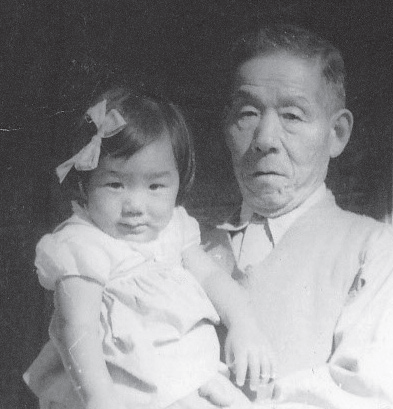
The author, Diana Morita Cole,
and her grandfather,
at the Minidoka, Idaho concentration camp,
where she was born.
Photo courtesy of the author.
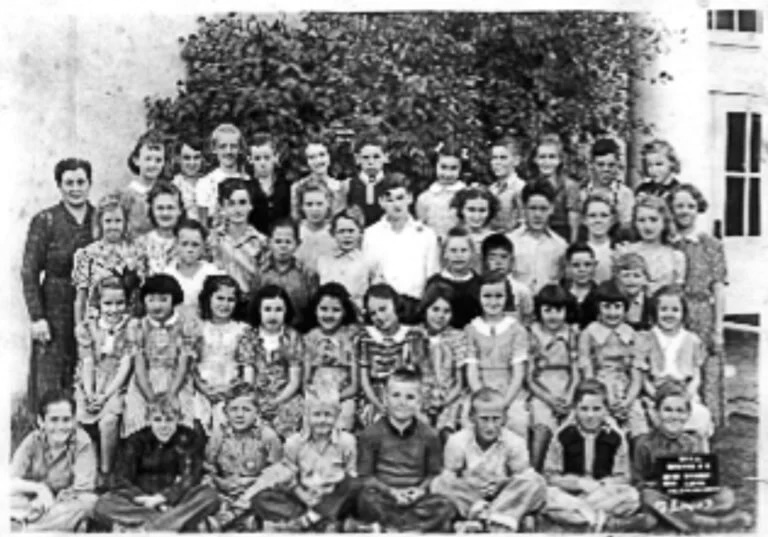
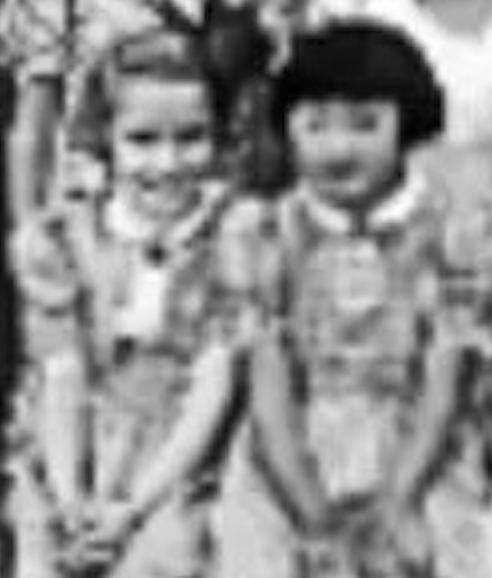
Odell School class photo, enlarged from photo shown at top of the page.